State Management in React: Context API vs Redux

By Jane Smith
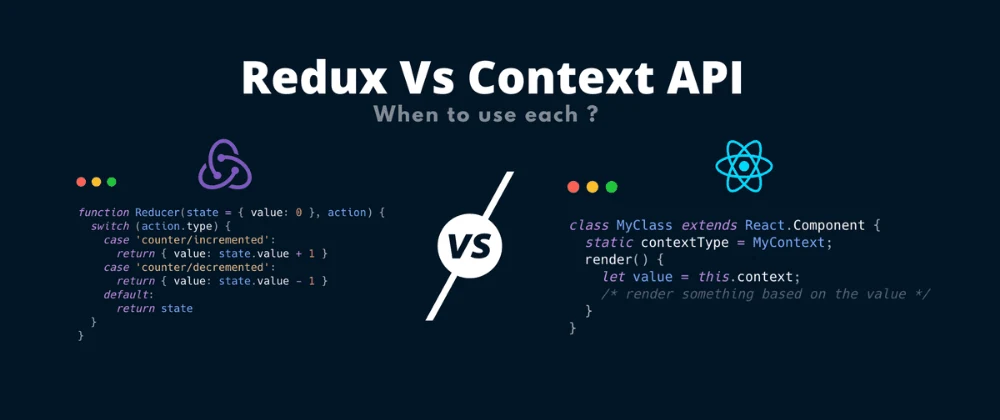
State management is one of the most important aspects of building complex React applications. In this article, we'll compare React's built-in Context API with Redux, exploring their strengths, weaknesses, and ideal use cases.
Understanding State Management in React
Before diving into specific solutions, let's understand what state management is and why it's important in React applications.
In React, "state" refers to the data that can change over time and affects the rendering of components. As applications grow in complexity, managing state becomes challenging, especially when multiple components need to access and update the same state.
The Context API
React's Context API provides a way to share values like themes, user data, or any other state between components without having to explicitly pass props through every level of the component tree.
How Context API Works
The Context API consists of three main parts:
- React.createContext: Creates a Context object
- Context.Provider: Provides the context value to components
- Context.Consumer or useContext: Consumes the context value
Here's a simple example:
// Create a context
const ThemeContext = React.createContext('light');
// Provider component
function App() {
const [theme, setTheme] = useState('light');
return (
);
}
// Consumer component using useContext hook
function ThemedButton() {
const { theme, setTheme } = useContext(ThemeContext);
return (
);
}
Advantages of Context API
- Built into React, no additional dependencies
- Simpler setup compared to Redux
- Sufficient for many applications
- Reduces prop drilling
- Works well with hooks (useContext, useReducer)
Limitations of Context API
- Not optimized for frequent updates (can cause re-renders)
- No built-in middleware support
- No time-travel debugging
- No centralized store (multiple contexts can become unwieldy)
Redux
Redux is a predictable state container for JavaScript apps, commonly used with React. It helps you write applications that behave consistently across different environments and are easy to test.
How Redux Works
Redux is based on three fundamental principles:
- Single source of truth: The state of your whole application is stored in a single store
- State is read-only: The only way to change the state is to emit an action
- Changes are made with pure functions: Reducers are pure functions that take the previous state and an action, and return the next state
Here's a simple Redux example:
// Action types
const INCREMENT = 'INCREMENT';
const DECREMENT = 'DECREMENT';
// Action creators
function increment() {
return { type: INCREMENT };
}
function decrement() {
return { type: DECREMENT };
}
// Reducer
function counterReducer(state = { count: 0 }, action) {
switch (action.type) {
case INCREMENT:
return { count: state.count + 1 };
case DECREMENT:
return { count: state.count - 1 };
default:
return state;
}
}
// Store
const store = createStore(counterReducer);
// Component with Redux
function Counter() {
const count = useSelector(state => state.count);
const dispatch = useDispatch();
return (
Count: {count}
);
}
Advantages of Redux
- Predictable state management
- Powerful developer tools (time-travel debugging)
- Middleware support for async operations
- Large ecosystem and community
- Centralized store makes state management more organized
- Great for complex applications with lots of state changes
Limitations of Redux
- Steeper learning curve
- More boilerplate code
- Additional dependency
- Can be overkill for simple applications
When to Use Context API vs Redux
Use Context API when:
- Your application is simple to medium complexity
- You want to avoid adding extra dependencies
- You need to share state between a few components
- State updates are infrequent
- You're using React hooks extensively
Use Redux when:
- Your application is complex with lots of state management
- You need powerful debugging tools
- You need middleware for async operations
- You want a predictable state container
- You need to maintain a large state with frequent updates
- You want to leverage the Redux ecosystem
Combining Context API and Redux
It's worth noting that Context API and Redux are not mutually exclusive. In fact, they can complement each other:
- Use Redux for global application state that changes frequently
- Use Context API for theme, authentication, or other less frequently changing state
Modern Alternatives
The state management landscape in React is evolving. Some modern alternatives worth considering include:
- Redux Toolkit: Official, opinionated toolset for Redux that reduces boilerplate
- Recoil: Facebook's experimental state management library
- Zustand: Minimalistic state management solution
- Jotai: Primitive and flexible state management for React
Conclusion
Both Context API and Redux have their place in React development. The choice between them depends on your application's complexity, your team's familiarity with the tools, and your specific requirements.
For simpler applications or components that don't require complex state management, Context API is often sufficient and easier to implement. For larger applications with complex state interactions, Redux provides a more robust solution with better developer tools and middleware support.
Remember, the goal is to make your application maintainable and performant, so choose the tool that best serves your specific needs.